Proudly serving Gilbert, Chandler, Mesa, Queen Creek, Tempe, San Tan Valley & surrounding areasCall or Text 24/7: 480-243-9263
Aerial drone photo of suburban residential neighborhoods, desert landscaping, and stucco homes in Gilbert, AZ.

Shade Sail Installation in Gilbert, AZ for Backyards, Pools & Commercial Spaces

Gilbert Shade Structures installs shade sails for homes and businesses in Gilbert, Arizona. We plan coverage for backyards, decks, pools, playgrounds, restaurant patios, and commercial parking areas. Our shade options also include pergolas, patio covers, ramadas, and louvered roofs. Each project starts with a site visit to match the shade layout to your outdoor space.

Gilbert summers can push past 110 degrees for weeks, leaving unshaded outdoor areas difficult to use for half the year. Across Maricopa County, extreme UV levels between May and September make coverage especially valuable. We review sun paths, wind exposure, and anchor conditions before choosing the fabric and supports. Request a free, no-obligation estimate to see what fits your property.

Our installations use aircraft-grade stainless steel hardware and aluminum or steel posts set in engineered concrete footings where needed. We provide an itemized estimate and a scaled layout before you commit.

Gilbert Shade Structures provides shade sail installation in Gilbert, Chandler, Mesa, Queen Creek, Tempe, and the greater East Valley.

★ ★ ★ ★ ★4.9/5 Customer Rating · 29 Years of Shade Experience · 2,000+ Projects Completed · Licensed, Bonded & Insured · Serving Homes, HOAs & Businesses

Shade Sail Options & Benefits

What Is a Shade Sail?

A shade sail is a tensioned fabric membrane anchored between three or more points to form a taut canopy. Its shape and corner heights determine how the shade falls and how the fabric handles wind and rain.

Compared with a full patio cover, sails are lighter, generally more affordable, and faster to install. They can fit tight side yards, stretch over pools, or cover commercial spaces where a conventional post-and-beam layout is impractical.

Fabric selection changes how the canopy performs. Knitted HDPE shade cloth provides breathable coverage, while PVC-coated waterproof membranes suit spaces where keeping rain out matters.

Benefits of a Well-Planned Shade Sail

A properly tensioned sail can block 90 to 95 percent of UV radiation, depending on fabric density, and reduce surface temperatures underneath by 10 to 15 degrees compared with unshaded concrete or turf. Placement matters as much as size when you want shade over the area you actually use.

  • Make backyard seating useful beyond the milder October-through-April months.
  • Reduce glare across pool water and nearby outdoor seating.
  • Fit angled coverage into narrow or irregularly shaped yards.
  • Keep an open outdoor feel with lightweight fabric coverage.
  • Shade west-facing windows or patio doors to reduce direct solar heat gain.
  • Cover outdoor dining areas while planning around pedestrian access.
  • Choose breathable cloth or waterproof fabric to match the space.
  • Spend less per square foot of coverage than a solid patio cover.
Residential and Commercial Shade

Shade Sail Installation Services

From a single backyard canopy to multiple sails over a commercial property, the layout should follow how people use the space. We tailor coverage, attachment points, and structural supports to the setting.

Backyard Shade Sails

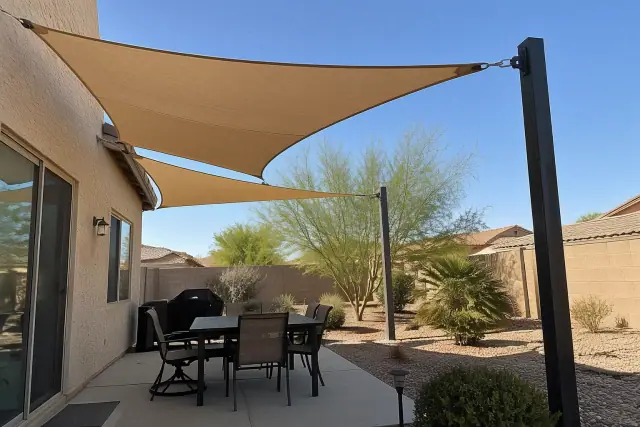
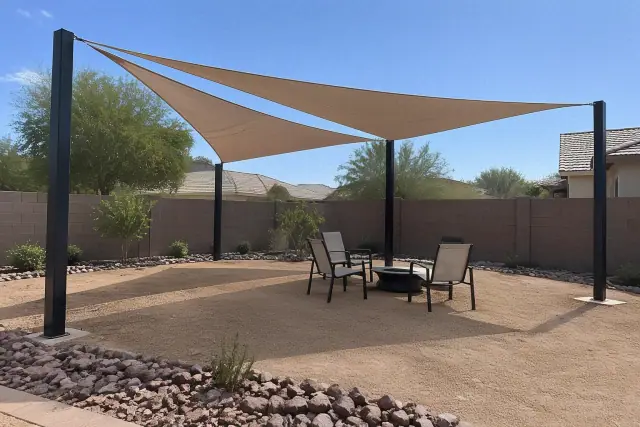
Backyard shade sails installed over river rock at a home in Gilbert, AZ.

Bring shade to the patio that becomes uncomfortable after 9 a.m. We plan residential sails around seating areas, available anchors, and the sun's path, including yards in Val Vista Lakes, Power Ranch, and Agritopia.

Request Estimate

Deck and Patio Shade Sails

Shade sails installed over a residential patio in Gilbert, AZ, attached to a stucco wall.

Elevated decks need attachment planning that accounts for their existing structure. Engineered turnbuckle hardware and stainless steel eye bolts allow controlled tension, with anchor capacity checked before the sail is mounted.

Request Estimate

Pool Shade Sails

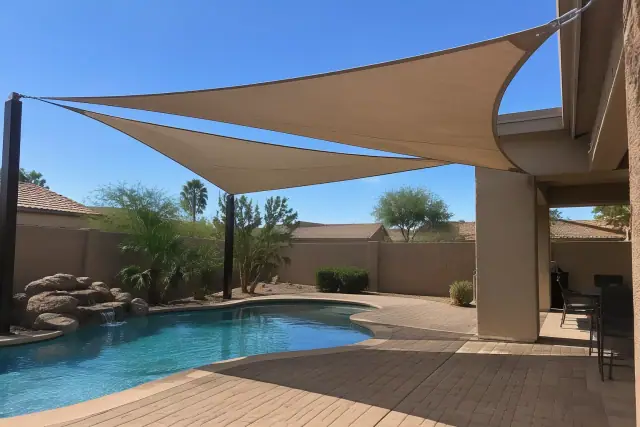
Pool shade sails installed over paver decking in a backyard in Gilbert, AZ.

Pool decking can exceed 140 degrees in direct July sun. We angle sails to shade exposed decking and reduce glare off the water, selecting breathable or waterproof fabric according to the coverage you want.

Request Estimate

Playground Shade Coverage

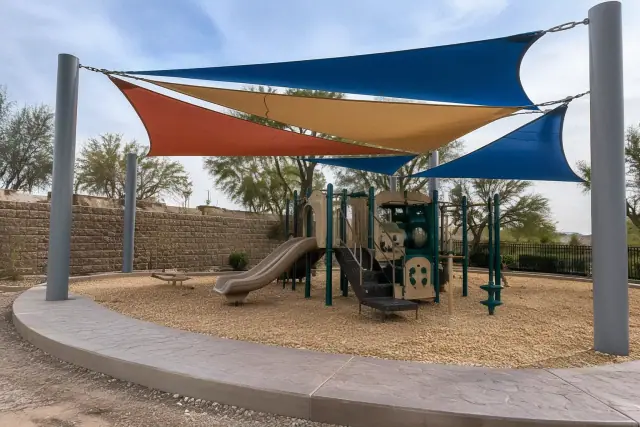
Playground shade sail installation with multi-colored fabric and steel columns in Gilbert, AZ.

Sun-exposed playground equipment can become hot enough to cause burns within seconds of contact. We install coverage for HOAs, schools, and municipal parks using CPSC-informed layouts, with anchors positioned outside fall zones.

Request Estimate

Restaurant and Business Patio Shade

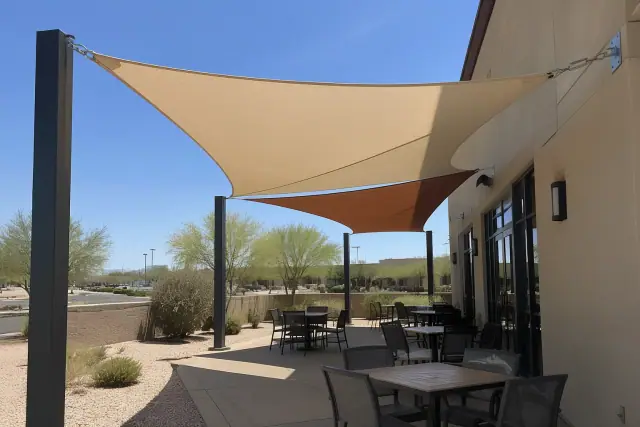
Shade sail installation over a restaurant patio at a commercial property in Gilbert, AZ.

Dining areas, outdoor seating, and medical facilities need shade that preserves room to move. Where center posts would interfere with sightlines or ADA clearance, a cantilever shade design can shift support away from the occupied space.

Request Estimate

Commercial Parking and Work-Area Shade

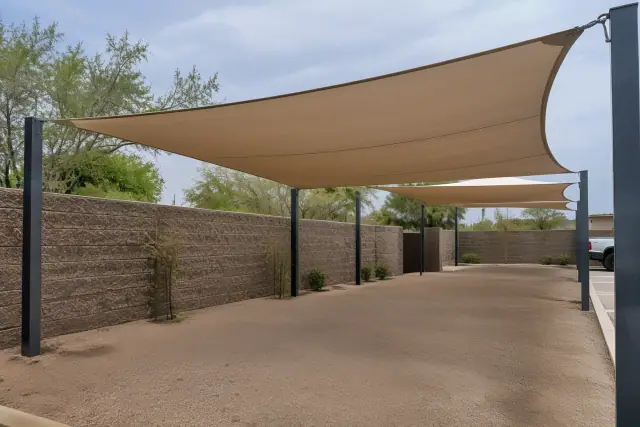
Shade sail installation over a commercial parking area in Gilbert, AZ.

We fabricate steel shade structures for retail lots, fleet parking, and industrial loading or staging areas. Coverage limits direct sun on vehicles and pavement, and branded shade structures with logo sails are available for commercial properties.

Request Estimate
Fabric and Support Choices

Shade Sail Materials and Mounting Options

Start with whether you need airflow, rain protection, or a particular attachment layout. Fabric choice and support design work together, so a material selected for one property may need different anchors on another.

Breathable HDPE shade cloth tensioned on steel anchors at a home in Gilbert, AZ.

Breathable HDPE Shade Cloth

Knitted HDPE shade cloth offers breathable, fade-resistant coverage for outdoor areas where sun protection is the priority. Its open weave lets some rain pass through.

  • Knitted construction allows airflow through the canopy.
  • UV-stabilized material suits desert sun exposure.
  • A practical choice for backyard seating and poolside shade.
  • Fabric density affects the level of UV protection.
  • Periodic cleaning and tension checks help maintain the canopy.
Request Estimate
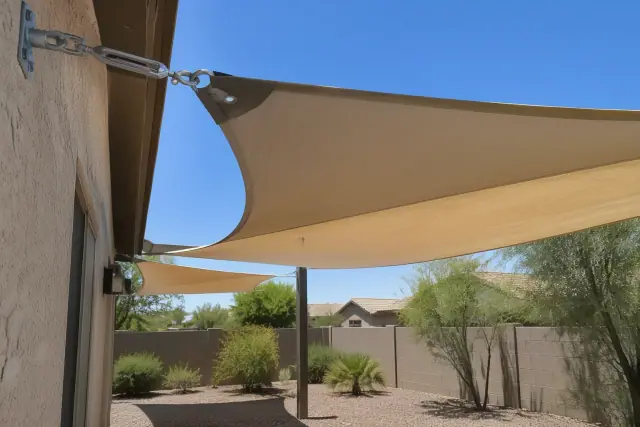
Waterproof PVC-coated shade sail installed on a residential stucco wall in Gilbert, AZ.

Waterproof PVC-Coated Sails

PVC-coated membranes suit spaces where you want dry coverage during rain. They need enough pitch to drain and stronger anchor planning to account for wind and water loads.

  • Waterproof coating sheds rain instead of letting it through.
  • Corner heights establish the drainage direction.
  • Steeper pitch helps prevent water from collecting.
  • Attachment points must suit the membrane's loading.
  • An option for patios where rain protection matters.
Request Estimate
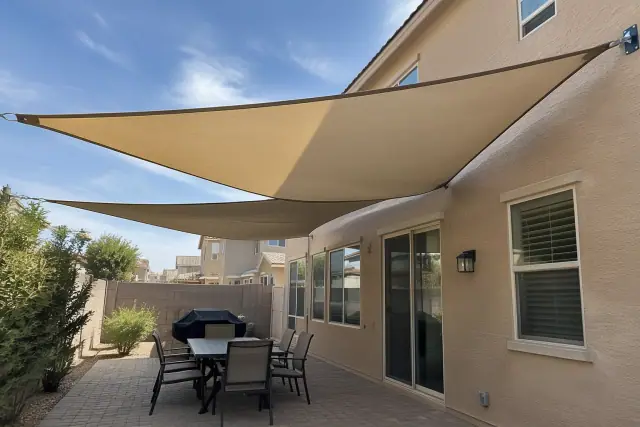
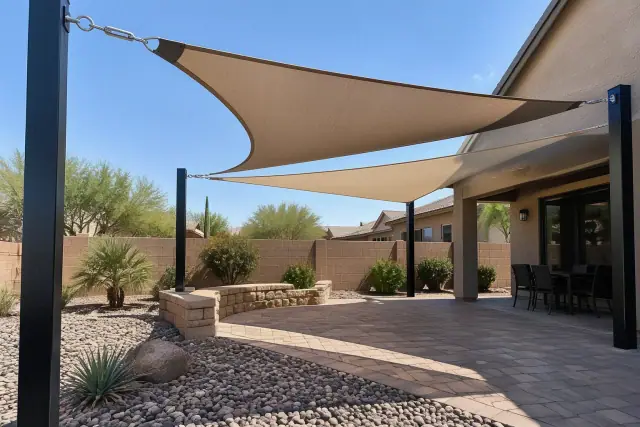
House-attached shade sails installed over a paver patio in Gilbert, AZ.

House-Attached Shade Sails

An existing wall, fascia, or roofline can provide an anchor when the structure can carry the sail's tension. We often combine one house-mounted attachment with two or three post anchors to spread the load.

  • Structural capacity is checked before hardware is installed.
  • Suitable wall framing can provide an attachment point.
  • Roofline and fascia connections need load review.
  • Additional posts distribute tension across the layout.
  • Unsupported stucco or trim is not a structural anchor.
Request Estimate
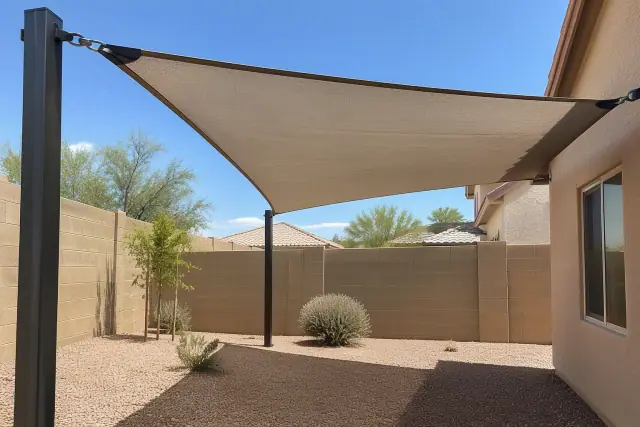
Freestanding post-supported shade sails installed over a landscape in Gilbert, AZ.

Freestanding Post-Supported Sails

New posts allow coverage where suitable building attachments are unavailable. Aluminum or steel supports sit in engineered concrete footings selected for the span, soil, and wind exposure.

  • Post locations follow the intended shaded area.
  • Aluminum and steel offer different structural options.
  • Heavier spans may call for steel supports.
  • Soil conditions influence footing design.
  • Wind uplift and fabric tension shape the support layout.
Request Estimate
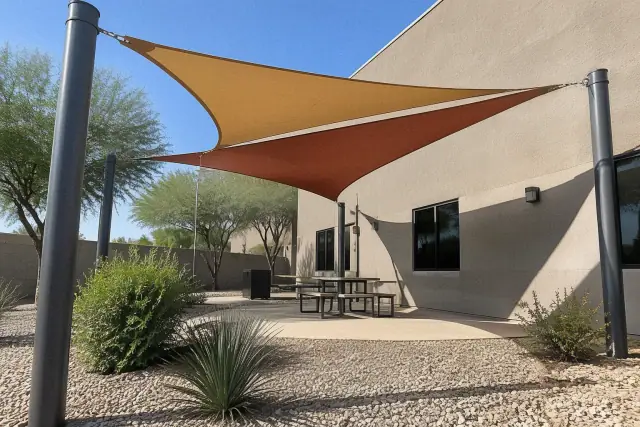
Commercial shade sail installation with overlapping triangular fabric membranes in Gilbert, AZ.

Multi-Sail Commercial Layouts

Multiple sails can cover larger outdoor areas while working around circulation and existing structures. Commercial layouts may require engineering stamps, new concrete footings, and a coordinated approach to post placement.

  • Coverage can extend across outdoor seating areas.
  • Playgrounds need anchors outside equipment fall zones.
  • Parking layouts must preserve vehicle maneuverability.
  • Loading and staging spaces need usable clearances.
  • Logo sails can support a property's visual identity.
Request Estimate
Plan Around Your Property

Choosing the Right Shade Sail Approach

A good fit starts with when you need shade, how much rain protection you expect, and where the structure can carry tension. Our consultation brings those decisions together before fabric or posts are selected.

Sun-Path Planning and Scaled Layouts

We begin with a site visit and sun-path analysis to locate useful coverage. A scaled layout lets you review sail placement and choose a modern, rustic, or minimalist look before committing.

Local Wind and Soil Assessment

Our structural planning accounts for Sonoran Desert wind exposure and Gilbert's caliche and decomposed granite soils. Post material, footing size, and anchor loads are selected together so the support design fits the property.

Clear, Itemized Estimates

Your free shade sail estimate separates the costs that change with coverage, fabric, posts, and attachment complexity. Permit and engineering needs are included in the scope discussion, along with electrical work if you want integrated lighting or fans.

Shade Built for Local Conditions

Why Choose Us for Shade Sail Installation?

Gilbert Shade Structures is a licensed and insured contractor operating under Arizona Registrar of Contractors requirements. Our installations follow ASCE 7 wind load provisions and the International Building Code as adopted locally, with permits handled through the Town of Gilbert Building Safety Division when required. We focus on the practical problems below when planning your canopy.

Get a Free Estimate

Patios Too Hot to Use

Exposed concrete, turf, and seating can make a backyard uncomfortable during the hottest part of the day. Sun-path planning places the canopy over the spaces you use, rather than leaving useful shade off to one side.

Sagging or Billowing Fabric

Uneven tension and loose hardware can leave a sail sagging or moving excessively in gusts. We tension fabric to the manufacturer's specification and check the hardware so the canopy holds its intended shape.

Rain Collecting in the Canopy

A poorly pitched sail can hold water instead of draining toward a low corner. Corner heights and fabric choice need to work together, especially for waterproof membranes exposed to monsoon rain.

Weak or Overloaded Anchors

Attaching hardware to unsupported trim or stucco can lead to pull-out during high winds. We check the underlying structure and use additional posts where needed to distribute tension across suitable attachment points.

Posts Blocking Access

A support placed in the wrong spot can interrupt a dining area, walkway, or parking maneuver. Cantilever designs keep center posts out of occupied space and transfer the load to a reinforced footing designed for uplift.

Dust Buildup and Worn Fabric

Wind-driven debris, desert dust, and mineral deposits can leave shade cloth dirty or damaged. Hardware inspections, tension adjustments, and fabric replacement address wear without assuming every problem requires an entirely new layout.

From Site Visit to Final Tension

Our Shade Sail Installation Process

Installation moves from site assessment and layout to structural preparation, fabric fitting, and ongoing care. We review the conditions behind each choice so you know what your project includes.

01.

Assess the Site and Sun Exposure

We review how you use the outdoor area, track the sun's path, and assess wind exposure. Soil conditions, utility locations, and possible building attachments help determine where supports can go.

02.

Choose Fabric and Review the Layout

Compare breathable HDPE with waterproof PVC-coated fabric, then review sail shapes and corner heights. We provide a scaled layout and an itemized estimate reflecting the selected coverage and anchor conditions.

03.

Confirm Structural and Permit Needs

We check proposed attachment points and determine whether engineering and permits are needed. On qualifying projects, our team handles the application and inspection process with the Town of Gilbert Building Safety Division.

04.

Install Footings, Posts, and Anchors

Footings in Gilbert's caliche and decomposed granite soils typically run 24 to 36 inches deep, depending on structure size and wind exposure category. The project design sets the actual footing dimensions, post arrangement, and stainless steel attachment hardware.

05.

Fit the Sail and Adjust Tension

We tension the fabric to manufacturer specifications, establish drainage toward the appropriate corners, and torque the hardware. These adjustments address sagging and hardware creep during the high-wind monsoon events common in July and August.

06.

Plan Seasonal Checks and Fabric Care

Check hardware torque, fabric tension, and anchor movement before monsoon season each June. Inspect again in September for debris damage and re-tensioning needs. We provide tension adjustments, hardware inspections, and fabric replacement as the canopy ages.

Make Your Outdoor Space More Usable

Request a Shade Sail Estimate

Tell us which part of your property needs shade and whether your priority is cooler seating, poolside comfort, or commercial coverage. A free, no-obligation estimate from Gilbert Shade Structures starts with the site conditions and options that fit your space.

Planning, Pricing, and Care

Shade Sail Installation FAQs

Find answers about installed cost, attachment choices, rain protection, and maintenance. Your site visit helps resolve the details that depend on the property's structure and exposure.

Discuss Your Shade Project

Residential installation typically costs $1,200 to $4,500 per sail, depending on size, fabric grade, and anchor complexity. A single sail using suitable existing posts falls toward the lower end, while new footings and engineering increase the scope. Commercial multi-sail projects may exceed that range. We provide a free, itemized estimate after reviewing the site.

Installation involves wind-load calculations, suitable footings, structural attachment checks, and even fabric tension. A DIY kit can fail within a season or two when posts are undersized or tension is uneven. Professional planning addresses those conditions before the sail is fitted.

Standard shade cloth lets some rain through, so it does not provide the full weather protection of a solid roof. Fabric needs periodic re-tensioning and is more vulnerable to extreme wind when anchors are poorly designed. If full rain coverage is essential, a patio cover or ramada may suit the space better.

Yes, when the wall framing, fascia, or roofline can carry the tension load. We check the structural capacity before attaching hardware and can combine building connections with post anchors. Unsupported stucco or trim should not carry the sail's tension.

Corner posts are typically angled outward to counter the fabric's inward pull. Angles commonly fall between 5 and 15 degrees, depending on the sail geometry. The final post arrangement and corner heights follow the design's tension and drainage needs.

Rain passes through standard knitted shade cloth because its weave is breathable. PVC-coated waterproof sails are available when dry coverage is the priority. Those membranes need steeper pitch and stronger anchors to manage combined wind and water loads.

Structure size, attachment type, and new concrete footings affect permit requirements. Permanent house-attached installations and larger commercial structures may require review by the Town of Gilbert Building Safety Division. We handle applications and inspections as part of the installation scope on qualifying projects.

The UV-stabilized fabrics we use typically retain their color and tensile strength for 10 to 15 years in full desert exposure. Solid structures such as steel patio covers or ramadas generally have a longer service life of 20 to 30 years. Fabric condition, tension, and storm damage still need periodic inspection.

Rinse the cloth with a garden hose and mild soap two to four times a year to remove dust and mineral buildup. Avoid pressure washing directly against the weave, which can stretch knitted HDPE prematurely. Cleaning also gives you an opportunity to look for visible fabric damage.

We also install pergolas, aluminum or steel patio covers, steel or heavy timber ramadas, and louvered roofs with manual or motorized adjustment. Metal awnings, attached or freestanding steel carports, and cantilever structures provide additional options for buildings, vehicles, and outdoor seating. The right choice depends on the space, desired rain protection, and access requirements. A metal carport can often keep cabin temperatures dozens of degrees cooler than an uncovered driveway in July.

We offer financing options and payment plans for larger commercial and multi-sail projects. Ask about those options when reviewing the itemized estimate and project scope.

A sail positioned to shade a west-facing window or patio door can reduce direct solar heat gain during summer afternoons. The benefit depends on putting the shade where it intercepts sunlight before it reaches the glass or nearby concrete. Sun-path analysis helps guide that placement.

We offer tension adjustments, hardware inspections, and replacement fabric when an existing sail wears out. Many fabric manufacturers provide multi-year warranties against UV degradation. Review the fabric manufacturer's terms to understand the applicable coverage.