Rain Passes Through
Knitted HDPE fabric allows airflow and blocks UV rays, but its weave also lets water through. A heavy downpour can send runoff off the sail's lowest corner.
At Gilbert Shade Structures, we help homeowners weigh a shade sail's biggest disadvantage: limited weather protection. A sail provides overhead shade and airflow, but rain can pass through the fabric, wind loads strain the anchors, and sunlight reaches beyond its fixed footprint. This guide explains those tradeoffs for Gilbert patios, playgrounds, and commercial spaces, along with when a pergola, patio cover, or ramada may better suit the property.
Knitted HDPE fabric allows airflow and blocks UV rays, but its weave also lets water through. A heavy downpour can send runoff off the sail's lowest corner.
Monsoon gusts above 40 to 50 mph can tear fabric or pull undersized anchors loose. Worn stainless steel hardware, shallow footings, and undersized posts make the installation more vulnerable.
A sail's span, square footage, soil, and wind exposure determine its support requirements. Confirm post sizes, concrete footings, and attachment points before treating a kit as a complete installation.
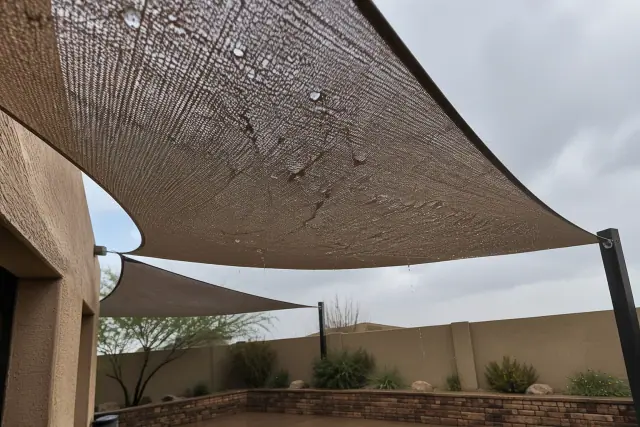
Water passing through the weave explains why a standard sail cannot keep patio furniture dry during a monsoon downpour.
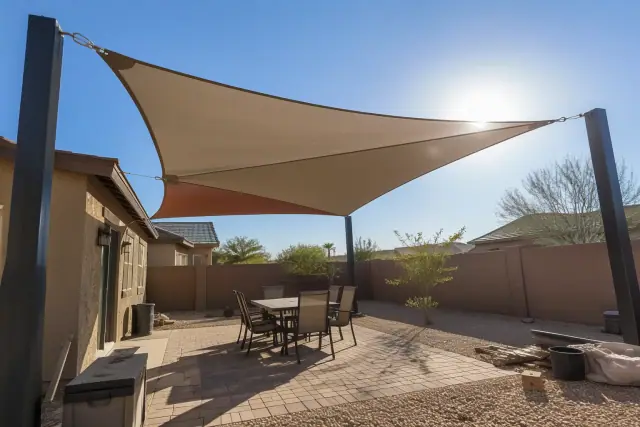
Sunlit seating beyond the sail's shadow reveals a coverage gap. Check where shade falls during the hours you actually use the patio.
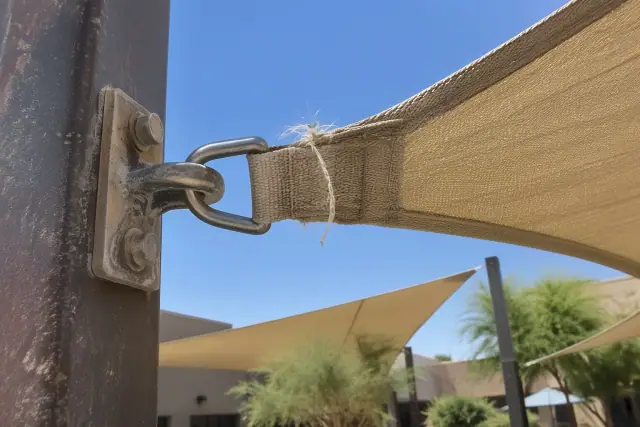
Small tears near a D-ring can spread under tension. Check stitching and turnbuckles at least twice a year to spot wear before it worsens.
A basic DIY sail kit can cost a few hundred dollars. The fabric purchase does not resolve whether the property needs engineered posts, concrete footings, or stronger attachment points.
Professional installation ranges from around $1,000 for a small residential sail with basic posts to $4,000 or more for larger commercial-grade sails with engineered footings and premium fabric. Square footage and anchor complexity affect the cost.
A professionally engineered commercial-grade sail with steel posts and concrete footings can cost $2,000 to $4,000 or more. The quote needs to account for the span, fabric grade, soil, and wind exposure.
Most shade sails last roughly 5 to 15 years, depending on fabric grade, installation, sun exposure, and wind. Budget fabric may need replacement closer to 3 to 5 years as stitching fails or the material becomes brittle.
| What the Space Needs | Shade Sail Limitation | Option to Compare |
|---|---|---|
| Overhead sun relief and airflow | A fixed fabric footprint leaves gaps as the sun moves and needs ongoing tension checks. | A sail can suit this use if the layout covers the occupied area at the right time. |
| Dry patio seating during rain | Knitted cloth lets rain through. Waterproof membranes cost more and need steeper pitch for drainage. | A solid patio cover or ramada provides structural roof coverage. |
| Adjustable sun and ventilation | A tensioned sail cannot change its angle as conditions change. | A louvered roof adjusts for shade and airflow and closes to shed rain. |
| Coverage at an entry or window | Exposed fabric fades and wears under sustained sun and wind. | A metal awning offers a durable option with a lower profile. |
| Dedicated vehicle protection | A sail provides fabric shade without the structural roof coverage this use may need. | A carport provides a structure dedicated to vehicle coverage. |
A sail's UV protection does not make its fabric immune to sunlight. Arizona's summer UV index regularly reaches 10 or 11, and even UV-stabilized HDPE loses strength with exposure. Dark terracotta or charcoal fabric can look washed out within 3 to 5 years, especially on south- and west-facing exposures. Gilbert's nearly 300 sunny days a year also make the position of the shadow important: the same triangle or rectangle cannot shade identical areas on a June afternoon and a December morning. Overlapping sails can close some gaps, but add posts, anchors, tension adjustments, and visual clutter. In settings such as Val Vista Lakes or the Heritage District, compare the angular fabric layout with the home's roofline and check any HOA requirements for color and placement.
Dust, pollen, and fine caliche dust settle into the weave, so periodic washing is part of sail ownership. Recheck tension every season as fabric stretches and hardware responds to thermal cycling between 115-degree summer days and cool winter nights. Sagging fabric, loose hardware, and worn seams need attention; retensioning alone cannot correct undersized supports. Posts need engineered concrete footings suited to the sail's area, soil, and wind exposure, rather than a shallow setting in decomposed granite. Confirm applicable permits with the Town of Gilbert Building Safety Division and have the installation's wind-load calculations and support details reviewed, including relevant ASCE 7 criteria. Playground and commercial sails also need fabric, hardware, and inspection routines suited to daily public use.
Are shade sails a good idea? They can suit a patio, play area, or dog run where affordable sun relief and airflow matter more than dry coverage. Can you leave one up all year? It is possible, but seasonal removal may be appropriate ahead of peak monsoon wind events between June and September; follow the manufacturer's instructions for the particular sail and installation. Public-use areas that cannot lose their shade seasonally need wind-rated supports and more frequent inspection. How does a louvered roof differ? Its adjustable slats change the shade and airflow and can close to shed rain. It costs more upfront, but provides a permanent alternative to fixed fabric when the space needs sun, ventilation, and rain control.
Share the area you want to shade, how you use it, and whether keeping it dry matters. Gilbert Shade Structures can compare sails, pergolas, patio covers, and ramadas, then evaluate the soil, span, and wind exposure before providing a firm installation quote.